Canada
 USA
USA Japan
Japan

 AB Inflatables
 AB Alumina
 AB Lammina
 AB Navigo
 AB Nautilus
 Zodiac RIBs
 Zodiac Yachtline
 Marlon Boats
 Used Boats
 Parsun Outboards
 2 Stroke Outboard
 Used Outboards
 Outboard Parts
 Seapro & Parsun Bundle
 Mercury Marine Propellers
 Michigan Propellers
 OMC Outboards Propellers
 Batteries
 Boats & Motor Parts
 Bunk Range
 Special Offer


Types of 10m RIB boat: A Comprehensive Guide At Boat Parts Warehouse
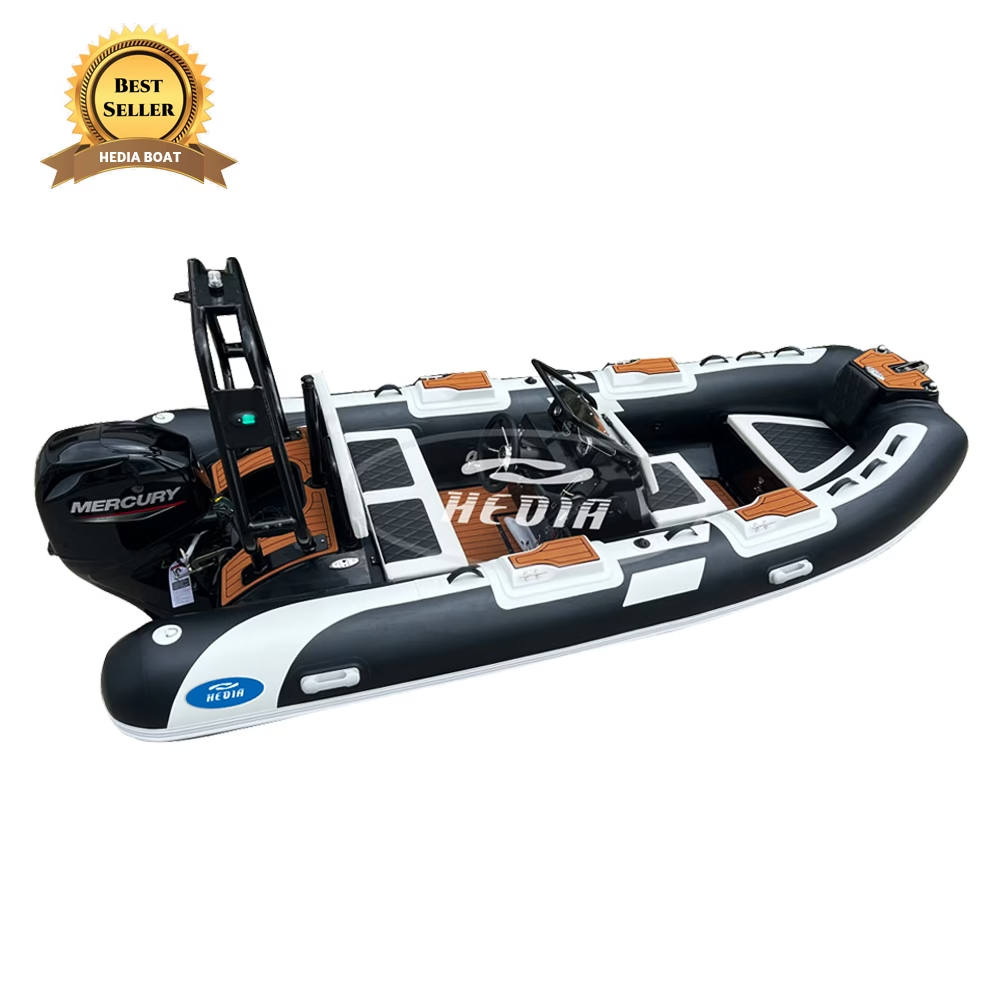
10m RIB boat
A 10m RIB boat (Rigid Inflatable Boat) offers an ideal balance between size, performance, and versatility. These boats are widely used across recreational, commercial, and professional sectors due to their excellent stability, buoyancy, and seaworthiness. The inflatable collar provides added safety and shock absorption, while the rigid hull ensures durability and speed. Below is a detailed breakdown of the primary types of 10-meter RIBs, each tailored to specific uses and environments. Boat Parts Warehouse
Coastal & Offshore RIBs
Built for durability and performance in open waters, these RIBs are engineered to handle rough seas, strong currents, and extended voyages along coastlines or far offshore.
Advantages
- High seaworthiness in challenging conditions
- Equipped with advanced navigation and safety systems
- Suitable for long-distance travel and overnight trips
- Often used commercially for charters and diving excursions
Limitations
- Higher fuel consumption due to powerful engines
- More complex maintenance requirements
- Premium pricing compared to smaller or simpler models
Best for: Ocean crossings, deep-sea fishing, diving expeditions, and commercial operations
Leisure & Sport RIBs
Designed for fun and agility, these RIBs prioritize speed, comfort, and ease of use for day trips, water sports, and family outings.
Advantages
- Fast acceleration and high-speed performance
- Spacious deck layout with comfortable seating
- Ideal for wakeboarding, tubing, and snorkeling
- Easy to trailer and launch from beaches or ramps
Limitations
- Less suited for overnight or offshore journeys
- Limited storage and onboard amenities
- May lack full cabin accommodations
Best for: Weekend getaways, family adventures, water sports, and coastal cruising
Professional RIBs
Engineered for mission-critical operations, these boats are used by coast guards, law enforcement, search and rescue teams, and marine research units.
Advantages
- Reinforced hulls and impact-resistant construction
- Equipped with emergency gear (first aid kits, radios, grab lines)
- High-speed response capabilities in all weather
- Reliable performance under extreme conditions
Limitations
- Expensive to purchase and maintain
- Overbuilt for casual recreational use
- Require trained personnel to operate safely
Best for: Search and rescue, maritime patrol, emergency response, and official marine duties
Touring RIBs
Optimized for extended exploration, touring RIBs offer enhanced comfort, fuel efficiency, and onboard living amenities for multi-day adventures.
Advantages
- Extended fuel range and efficient engines
- Cabin space with sleeping berths and basic galley
- Ample storage for food, clothing, and supplies
- Integrated navigation and communication systems
Limitations
- Higher initial investment and operating costs
- Heavier and less agile than sport models
- Requires more docking space and storage
Best for: Island hopping, coastal exploration, multi-day excursions, and live-aboard adventures
Utility RIBs
Designed for practical tasks, utility RIBs are workhorses used in construction, transport, diving support, and other industrial marine applications.
Advantages
- Robust build with reinforced decks and attachment points
- Capable of carrying heavy loads and multiple personnel
- Can operate in shallow or confined waters
- Versatile for various commercial and industrial roles
Limitations
- Minimal comfort features or luxury finishes
- Louder and less refined ride quality
- Not ideal for leisure or high-speed recreation
Best for: Marine construction, crew transfer, equipment hauling, and technical diving operations
| Type | Durability | Comfort | Performance | Primary Use |
|---|---|---|---|---|
| Coastal & Offshore | Excellent | Very Good | Excellent | Deep-sea travel, commercial charters |
| Leisure & Sport | Good | Excellent | Very Good | Water sports, day cruising |
| Professional | Exceptional | Fair | Exceptional | Search & rescue, law enforcement |
| Touring | Very Good | Very Good | Good | Extended voyages, island exploration |
| Utility | Excellent | Fair | Good | Workboats, transport, construction |
Expert Tip: When selecting a 10-meter RIB, consider your primary use case and operating environment. A boat optimized for offshore durability may be overkill for calm lake use, while a sport model might lack the safety features needed for open ocean travel. Always inspect the boat’s certification, engine reliability, and warranty options before purchasing.
Specifications and Maintenance of a 10m RIB boat
Requiring a balance of performance, durability, and safety, a 10-meter Rigid Inflatable Boat (RIB) is a popular choice among recreational boaters, rescue teams, and commercial operators. Understanding its key specifications helps buyers assess suitability for their intended use—whether for coastal cruising, offshore fishing, or water sports. Equally important is a consistent maintenance routine to preserve the boat’s structural integrity, extend its lifespan, and ensure safe operation in challenging marine environments.
Key Specifications of a 10-Meter RIB Boat
A 10-meter RIB offers an excellent combination of stability, speed, and passenger capacity. While exact specifications can vary by manufacturer and model, the following represent typical benchmarks for this class of vessel. These details are essential for evaluating performance, seaworthiness, and operational efficiency.
Dimensions and Hull Design
Length: Approximately 10 meters (32.8 feet)
Beam (Width): Around 3.5 meters (11.5 feet)
Keel Length: Typically 5 to 6 meters, contributing to directional stability and smooth planing.
The rigid fiberglass or aluminum hull provides strength and impact resistance, while the inflatable Hypalon or PVC tubes (collars) offer superior buoyancy, shock absorption, and stability. This hybrid design allows RIBs to handle rough seas more effectively than traditional rigid-hull boats of similar size.
Engine and Performance
Propulsion: Twin outboard engines are standard, offering redundancy and improved maneuverability.
Engine Power: 2 × 200 to 500 HP (gasoline or diesel), depending on intended use—higher horsepower for offshore or high-speed applications.
Top Speed: 35–55 knots, influenced by engine configuration, load, and sea conditions.
The powerful twin-engine setup ensures excellent acceleration, responsive handling, and the ability to operate safely even if one engine fails. Fuel-injected or modern four-stroke engines are preferred for fuel efficiency and reduced emissions.
Fuel Capacity and Range
Fuel Tanks: 200 to 600 liters (53–159 gallons), allowing for extended cruising or offshore travel.
Range: Approximately 200–400 nautical miles, depending on speed, sea state, and engine efficiency.
Larger fuel capacity supports longer trips without refueling, making 10-meter RIBs ideal for island hopping, diving excursions, or search-and-rescue missions. Proper fuel system maintenance is critical to prevent contamination and ensure engine reliability.
Capacity and Usability
Passenger Capacity: Typically 8–12 people, compliant with safety regulations.
Weight Capacity: Up to 1,500 kg, including passengers, gear, and fuel.
The open deck layout with seating, console, and optional cabin or sun pads makes these boats versatile for day trips, fishing, or luxury transport. Safety features such as grab rails, non-slip decks, and boarding ladders are standard on most models.
| Specification | Typical Value | Notes |
|---|---|---|
| Length | 10 m (32.8 ft) | Standard size for offshore-capable RIBs |
| Beam | 3.5 m (11.5 ft) | Enhances stability and deck space |
| Engine Configuration | Twin 200–500 HP | Outboard motors common; diesel for commercial use |
| Fuel Capacity | 200–600 L | Supports 4–8 hours of operation at cruising speed |
| Passenger Capacity | 8–12 persons | Varies by model and safety certification |
| Inflatable Tube Material | Hypalon or PVC | Hypalon offers superior UV and abrasion resistance |
Essential Maintenance Tips for a 10m RIB boat
Regular maintenance is crucial for preserving the performance, safety, and resale value of a RIB, especially given its exposure to saltwater, UV radiation, and mechanical stress. A proactive care routine prevents premature wear and costly repairs.
Post-Use Freshwater Rinse: Always rinse the entire boat—hull, tubes, deck, and engine—with fresh water after each use, especially after operating in salt, brackish, or dirty water. This removes corrosive salts, algae, and debris that can degrade materials over time.
Engine Maintenance: Inspect engines before and after every outing. Check oil levels, coolant, belts, and propellers. Follow the manufacturer’s service schedule for oil changes, spark plugs, and fuel filters. Flush outboard motors with fresh water using a flush mitten after saltwater use.
Inflatable Tube Care: Regularly inspect the Hypalon or PVC tubes for punctures, cracks, or delamination. Clean with mild soap and water, then apply a UV-protective dressing (e.g., 303 Aerospace Protectant) monthly to prevent fading and cracking caused by sun exposure.
Hull Inspection and Polishing: Examine the hull for scratches, dents, or osmotic blistering. Clean with marine-grade hull cleaner and polish periodically to maintain gloss and protect the gelcoat. Repair any damage promptly to prevent water ingress.
Storage Best Practices: During off-season or extended downtime, store the RIB in a dry, shaded area or under a breathable cover. Avoid prolonged sun exposure. If possible, deflate tubes slightly (but not completely) to reduce stress on seams while maintaining shape.
Electrical and Safety Systems: Test bilge pumps, navigation lights, batteries, and communication devices monthly. Ensure life jackets, flares, and fire extinguishers are onboard and within certification dates.
Important:
Always consult your RIB’s owner’s manual and follow the manufacturer’s maintenance guidelines. Using incorrect cleaning products or skipping routine checks can lead to material degradation, engine failure, or safety hazards. Regular upkeep not only protects your investment but also ensures a safer, more enjoyable boating experience.
The Durability of RIB Boats in Different Environments
Rigid Inflatable Boats (RIBs) are renowned for their exceptional durability and versatility across a wide range of marine environments. Constructed with robust materials such as marine-grade aluminum, fiberglass, and high-tensile PVC or Hypalon tubes, RIBs are engineered to withstand harsh conditions including strong waves, powerful currents, and high winds. Their unique hybrid design—featuring a rigid hull and inflatable collar—provides superior buoyancy, impact resistance, and stability, making them ideal for both recreational and professional use in diverse water conditions.
Whether navigating shallow coastal inlets or crossing open seas, RIBs offer a reliable and safe platform. Their ability to handle dynamic water states—from choppy offshore swells to calm nearshore zones—makes them a preferred choice for search and rescue operations, diving excursions, coastal patrols, and luxury day cruising. Below is a detailed breakdown of how RIB boats perform in various marine environments.
Rough Waters
RIBs are specifically engineered to excel in rough water conditions. Their deep V-shaped hulls are designed to cut through waves efficiently, minimizing slamming and providing a smoother, more stable ride compared to flat-bottomed vessels. This hydrodynamic design enhances directional stability and reduces the physical strain on both passengers and equipment during high-speed travel over choppy seas.
- Reinforced Hulls: Built with marine-grade aluminum or fiberglass, RIB hulls resist impacts from debris and maintain structural integrity under stress.
- Inflatable Tubes: Made from UV-resistant, abrasion-proof materials like Hypalon or high-tensile PVC, these tubes absorb shock and increase buoyancy, preventing capsizing in turbulent conditions.
- Performance in Swells: The tube collar acts as a buffer against wave impact, reducing spray and enhancing passenger comfort.
Key Benefit: Superior stability and safety in waves up to 4–6 feet, depending on size and design.
Shallow Water
One of the standout advantages of RIB boats is their ability to operate in shallow water environments. With a relatively shallow draft—often as little as 12–18 inches—RIBs can access areas that are off-limits to deeper-hulled vessels, such as estuaries, sandbanks, mangrove forests, and secluded coves.
- Maneuverability: Their lightweight construction and responsive handling allow for precise navigation in tight or sensitive ecosystems.
- Bottom Protection: The inflatable tubes protect the hull from grounding and reduce the risk of damage when operating over soft bottoms or submerged obstacles.
- Caution Required: While capable in shallow zones, operators should proceed slowly and avoid high speeds over sandbars or rocky areas to prevent punctures or hull abrasion.
Ideal Use: Eco-tourism, fishing in backwaters, and beach landings.
Coastal Areas
Coastal regions, where ocean swells meet shoreline dynamics, present variable conditions including shifting tides, wind-driven waves, and strong currents. RIBs are exceptionally well-suited for these transitional zones due to their balanced performance, durability, and responsiveness.
- Tide Adaptability: RIBs can launch and land safely during varying tide levels, making them ideal for beach access and tidal inlets.
- Wind Resistance: The low center of gravity and wide beam enhance stability in gusty coastal winds.
- Operator Skill: While RIBs are inherently stable, experienced handling is recommended when navigating breaking waves at inlets or surf zones.
Pro Tip: Use GPS and tide charts to plan coastal routes and avoid hazardous zones during peak tidal flows.
Open Sea
Larger RIB models (typically 8 meters and above) are specifically designed for offshore and open-sea operations. These vessels combine seaworthy hull designs with powerful outboard engines, enabling long-range travel across open waters with confidence and comfort.
- Offshore Capability: 10-meter RIBs are commonly used for offshore diving, crew transfers, and maritime patrols due to their endurance and stability.
- Fuel Efficiency: Efficient hull designs reduce drag, allowing for extended range without excessive fuel consumption.
- Safety Systems: Equipped with navigation electronics, VHF radios, and emergency gear, modern RIBs meet offshore safety standards.
Critical Factor: Proper outfitting with radar, autopilot, and life-saving equipment is essential for safe open-sea voyages.
Expert Insight: The durability of a RIB is not just in its construction but in its adaptability. Choosing the right size and configuration—such as tube thickness, hull material, and engine power—is crucial for maximizing performance in your intended environment. For mixed-use scenarios (e.g., coastal exploration with occasional offshore trips), a mid-sized RIB (7–9 meters) with a deep V-hull and 200–300 HP engine offers the best balance of agility, comfort, and resilience.
| Environment | Recommended RIB Size | Key Features | Operational Tips |
|---|---|---|---|
| Rough Waters | 7–10 meters | Deep V-hull, reinforced tubes, dual engines | Reduce speed in heavy swells; maintain balanced weight distribution |
| Shallow Water | 5–7 meters | Shallow draft, light displacement, protective keel strip | Use pole or electric motor in very shallow zones; avoid high-speed grounding |
| Coastal Areas | 6–8 meters | UV-resistant tubes, navigation lights, anchor system | Monitor tide changes; use GPS for safe beach landings |
| Open Sea | 9–12 meters | Fuel tanks, radar, autopilot, offshore safety gear | Always check weather forecasts; carry emergency communication devices |
Additional Durability Considerations
- Material Longevity: Hypalon tubes outlast PVC in UV exposure and saltwater, though they are more expensive. Regular cleaning and UV protectant application extend tube life.
- Corrosion Resistance: Marine-grade aluminum and stainless steel components resist saltwater corrosion, especially when rinsed after use.
- Maintenance: Inspect tubes for pressure loss and hull integrity regularly. Lubricate moving parts and check engine mounts for stress fractures.
- Storage: Store RIBs under cover or use fitted covers to protect tubes from prolonged sun exposure and extreme temperatures.
- Customization: Many RIBs can be upgraded with hardtops, seating, and electronic packages to enhance durability and functionality in specific environments.
Benefits of a 10m RIB boat: The Ultimate Inflatable Rigid-Hulled Vessel
Rigid Inflatable Boats (RIBs) have revolutionized maritime transportation and recreation, combining the durability of a solid hull with the buoyancy and shock absorption of inflatable tubes. A 10-meter RIB boat strikes the perfect balance between size, performance, and practicality. Whether used for leisure, professional operations, or adventure, this vessel delivers unmatched capabilities on the water. Below are the key advantages that make a 10-meter RIB boat a top choice among boaters, coast guards, and marine operators worldwide.
Did You Know? The 10-meter length is considered the “sweet spot” for RIBs—large enough for offshore operations and passenger capacity, yet still trailerable and manageable with a standard crew.
1. Exceptional Stability in All Sea Conditions
Stability is one of the defining characteristics of a 10-meter RIB boat. Unlike traditional inflatable or small rigid-hull boats, RIBs feature a solid fiberglass or aluminum hull paired with high-pressure inflatable pontoons (tubes), creating a low center of gravity and superior balance.
This design allows the boat to maintain stability even in rough, choppy waters. The wide beam and buoyant tubes resist rolling, making it ideal for high-speed maneuvers, sudden turns, or adverse weather conditions. Whether you’re navigating coastal swells or open ocean waves, the platform remains steady and secure.
This inherent stability enhances both safety and comfort, especially during fast rides or when carrying passengers, gear, or equipment. It also makes the boat suitable for activities like diving, fishing, or water sports, where a level deck is essential.
2. Unmatched Versatility Across Marine Applications
Versatility is where the 10-meter RIB truly shines. Its robust construction and balanced design allow it to excel in a wide range of environments and missions:
- Recreational Use: Ideal for day trips, island hopping, snorkeling excursions, and family outings.
- Fishing Expeditions: Spacious deck layout accommodates rods, coolers, and live wells; stable platform supports casting and reeling.
- Professional Operations: Widely used by coast guards, search and rescue teams, and maritime law enforcement due to its reliability and speed.
- Commercial Charters: Popular for tourist excursions, diving safaris, and luxury transfers thanks to its comfort and safety.
- Offshore Support: Used in the yachting industry as a tender for larger vessels, capable of carrying guests and supplies efficiently.
Whether operating in calm bays, nearshore waters, or open seas, a 10-meter RIB adapts seamlessly to varying water conditions and mission requirements.
3. High Speed and Efficient Performance
Speed is a hallmark of RIB design. A 10-meter model typically supports powerful outboard or inboard engines—often ranging from 200 to 400+ horsepower—enabling top speeds of 30–50 knots depending on configuration.
This high-speed capability makes the boat perfect for long-distance travel, emergency response, or simply enjoying an exhilarating ride. The deep-V hull cuts through waves with minimal resistance, reducing drag and improving fuel efficiency over long journeys.
Moreover, speed contributes to safety: in changing weather or emergencies, the ability to reach sheltered waters quickly can be lifesaving. The boat’s agility and rapid planing ability ensure responsive handling even at high velocities.
4. Enhanced Safety Features and Seaworthiness
Safety is engineered into every aspect of a 10-meter RIB. The combination of a rigid hull and inflatable tubes provides redundancy—if the hull is compromised, the tubes keep the boat afloat. This unsinkable design is a major advantage in offshore environments.
Additional safety features include:
- Pointed Prow (Bow): Cuts cleanly through waves, reducing impact and spray.
- Non-Slip Decking: Ensures secure footing even when wet.
- Grab Rails and Handholds: Strategically placed for passenger security during movement.
- Buoyant, Padded Seats: Provide comfort and added flotation in case of capsizing.
- Self-Draining Deck: Prevents water accumulation and improves stability.
These features make RIBs a preferred choice for military, rescue, and commercial operations where personnel safety is paramount.
5. Low Maintenance and Long-Term Durability
Low maintenance is another compelling benefit of 10-meter RIB boats. Constructed from durable materials like marine-grade aluminum, fiberglass, and UV-resistant hypalon or PVC tubes, these vessels resist corrosion, abrasion, and environmental degradation.
Compared to traditional wooden or steel boats that require frequent polishing, painting, or anti-fouling treatments, RIBs demand significantly less upkeep. The inflatable tubes only need periodic pressure checks and cleaning, while the hull resists osmosis and rust.
Engines—typically outboard motors—are mounted externally, allowing for easy access during servicing, repairs, or replacements. Routine tasks like flushing the engine, checking propellers, or inspecting tubes can be performed quickly without specialized tools.
With proper care, a 10-meter RIB can last decades, offering excellent return on investment for private owners and commercial operators alike.
| Benefit | Key Advantage | Ideal For | Lifespan & Maintenance |
|---|---|---|---|
| Stability | Low center of gravity with buoyant tubes prevents capsizing | Rough seas, high-speed turns, passenger transport | Minimal; inspect tubes annually |
| Versatility | Adaptable to recreation, rescue, fishing, and charter use | Coastal and offshore operations | Durable materials; clean after saltwater use |
| Speed | High horsepower capacity enables fast planing and cruising | Emergency response, long-distance travel | Regular engine servicing recommended |
| Safety | Unsinkable design with redundant flotation | Search and rescue, offshore navigation | Inspect hull and tubes biannually |
| Low Maintenance | Resistant to rust, rot, and UV damage | Private owners, charter fleets | Years of service with basic care |
Expert Tip: To maximize the lifespan of your RIB, rinse it thoroughly with fresh water after each saltwater use, store the tubes partially inflated in shaded areas, and apply UV protectant to the inflatable surfaces every few months.
🧰 Key Construction Materials 10m RIB boat
⛱ Hypalon/CSM Tubes – Best for Tropical Asia
- UV-resistant (critical for high heat regions)
- Handles oil, chemicals, and saltwater exposure
- Longer lifespan than PVC
⚓ Hull Options
Fiberglass (GRP)
- Smooth ride
- Good balance of strength & cost
- Often used for tourism boats
Aluminum (5083 / Marine Grade)
- Extremely rugged
- Best for rough operations, SAR, military
- Lighter than fiberglass
Composite (Carbon/Kevlar Reinforced)
- Seen in high-performance military RIBs
- Very strong and lightweight
📦 Deck Layout Configurations for 10m RIB boat
1. Open Deck (Transport / Cargo / Resorts)
- Wide deck space
- Easy boarding and unloading
- Ideal for commercial operators
2. Dive/Rescue Configuration
- Ladder systems
- Dive racks
- Tank storage
- Self-draining decks
3. Patrol / Enforcement Setup
- Shock-absorbing stand-up console
- Electronics mast
- Radar, VHF, GPS
4. Passenger Layout
- Bench seating or jockey seats
- Sunshade or T-Top
- Smooth ride for tourism
🌊 Common Industrial Uses of 10m RIB boat
1️⃣ Tourism & Resort Transfers
- Fast, safe island transfers
- Snorkel/dive shuttles
- Island hopping tours
2️⃣ Commercial Transport
- Cargo support
- Crew transfer for ports/marinas
3️⃣ Diving Operations
- Stable platform for divers
- Plenty of deck space
- Ladder and tank racks
4️⃣ Search & Rescue (SAR)
- High maneuverability
- Fast response speeds
- Self-bailing decks
5️⃣ Marine Patrol & Law Enforcement
- Rapid interception capability
- Tactical layouts
- High-speed pursuit
6️⃣ Offshore Oil & Gas Support
- Crew shuttles
- Platform standby
- Emergency support and inspection boats
7️⃣ Environmental & Research Work
- Stable work platform
- Suitable for equipment mounting
Conclusion: Why Choose a 10m RIB boat ?
Its intelligent design ensures comfort and security, while its rugged build promises years of dependable service. Investing in a 10-meter RIB isn’t just about buying a boat—it’s about gaining access to greater freedom, safety, and adventure on the water.
A 10-meter RIB boat is one of the most capable marine platforms available: strong, fast, stable, and adaptable for all types of commercial, industrial, and rescue applications — especially in warm, tropical waters where durability and reliability are essential.
Whether you operate in Southeast Asia, India, the Middle East, or island regions, a well-built RIB can dramatically improve efficiency, safety, and overall operational capabilities.
For engines, propellers, electrical systems, and marine hardware suited for 10m RIBs, Boat Parts Warehouse offers worldwide service and reliable parts for commercial operators.
Frequently Asked Questions About RIB Boats 10m RIB boat
Q1: What is the average price of a 10-meter RIB boat, and how does storage location affect ownership costs?
While the initial purchase price of a 10-meter Rigid Inflatable Boat (RIB) can range from $80,000 to $150,000 depending on brand, engine type, and onboard features, ongoing ownership costs are significantly influenced by storage method:
- Marina Berthing (In the Water): Storing your RIB in the sea typically costs around $600 per month. This includes mooring fees, hull maintenance, antifouling treatments, and protection from saltwater corrosion.
- Onshore Storage (Trailer or Dry Stack): Keeping the boat on land reduces exposure to waterborne elements and generally costs about $300 per month. This may include trailer maintenance, occasional cleaning, and storage yard fees.
Additional factors such as insurance (typically 1–3% of the boat’s value annually), fuel, routine servicing, and winterization should also be considered when calculating total ownership expenses.
Q2: Are RIB boats able to withstand icy waters, or do they require upgrades for cold environments?
RIB boats are built with durable, marine-grade materials like hypalon or PVC tubes and reinforced fiberglass or aluminum hulls, allowing them to handle moderate cold-weather conditions. However, extended use in icy or freezing waters requires specific upgrades to ensure safety and longevity:
- Anti-Ice Coatings: Applying hull treatments that resist ice buildup helps prevent damage from freezing spray and ice accumulation.
- Engine Winterization: Outboard or inboard engines must be properly winterized to avoid freezing coolant or fuel lines.
- Heated Components: Upgrading with heated steering systems, bilge heaters, or cabin heating (if equipped) improves reliability in sub-zero temperatures.
- Material Checks: Cold weather can make inflatable tubes more brittle; regular inspections for cracks or leaks are essential during winter operation.
With proper preparation and modifications, RIBs can operate safely in icy conditions, making them suitable for search-and-rescue missions, polar expeditions, or winter fishing in northern regions.
Q3: Are RIB boats appropriate for use in shallow water?
Yes, RIB boats are exceptionally well-suited for shallow water navigation due to their unique design characteristics:
- Shallow Draft: Most 10-meter RIBs have a draft of only 0.5 to 1 meter (1.5–3 feet), allowing access to areas where deeper-hulled vessels cannot go.
- Flexible Tubes: The inflatable tubes absorb impact and provide buoyancy close to shore, reducing the risk of hull damage when grounding lightly.
- Lightweight Construction: Their relatively low weight enables easy launching from beaches and operation in estuaries, sandbars, and coastal inlets.
- Jet Drives (Optional): Some models feature jet propulsion instead of propellers, further enhancing shallow-water performance and minimizing underwater hazards.
This makes RIBs ideal for coastal exploration, island hopping, diving trips, and rescue operations in intertidal zones.
Q4: What is the average lifespan of a RIB boat?
A well-maintained RIB boat can last between 10 to 15 years on average, with many vessels remaining operational beyond 20 years with proper care. The longevity depends on several key factors:
| Factor | Impact on Lifespan |
|---|---|
| Material Quality | Hypalon tubes last longer than PVC (up to 20+ years vs. 10–15) due to superior UV and ozone resistance. |
| Maintenance Routine | Regular cleaning, inflation checks, and protective coatings extend service life significantly. |
| Usage Frequency | Daily commercial use (e.g., tours, patrols) accelerates wear compared to weekend recreational use. |
| Storage Conditions | Shade-covered, dry storage prevents UV degradation and prolongs tube and deck integrity. |
Owners who follow manufacturer guidelines, perform seasonal inspections, and address minor repairs promptly can maximize their RIB’s durability and resale value.
Q5: How fast can RIB boats go?
RIB boats are known for their impressive speed and stability, with most 10-meter models capable of reaching 35 to 45 knots (approximately 40–52 mph or 65–83 km/h). Several factors influence top speed:
- Engine Power: A single 250–400 HP outboard engine is typical for this size, with twin-engine setups enabling higher speeds and better handling.
- Weight and Load: Passenger count, fuel, and gear affect performance—lighter loads result in faster acceleration and higher top speeds.
- Sea Conditions: Calm waters allow maximum velocity, while rough seas or strong currents reduce effective speed and require cautious operation.
- Hull Design: Deep-V or multi-chine hulls improve performance in choppy water while maintaining planning efficiency.
🤖 FAQs 10m RIB boat
1. What is a 10m RIB boat used for?
A 10m RIB is used for transport, tourism, patrol, rescue operations, diving support, and offshore industrial work due to its stability and large deck space.
2. What materials are best for a 10m RIB boat?
Hypalon tubes and fiberglass or aluminum hulls are preferred. They offer durability, UV resistance, and long-term performance in tropical saltwater conditions.
3. How powerful are the engines on a 10m RIB?
Most 10m RIBs use twin outboards ranging from 150–300HP each, enabling 30–50+ knot speeds depending on load and mission profile.
4. What are the benefits of a 10-meter RIB boat?
Benefits include high load capacity, offshore capability, fuel efficiency, shock-absorbing tubes, and adaptability for commercial and professional use.
5. What grades do 10m RIBs come in?
They come in commercial, professional/rescue, and military/tactical grades, each built to withstand different operating demands.
6. Why choose Hypalon tubes for 10m RIBs?
Hypalon is UV-resistant and heat-resistant, making it essential for tropical environments like Southeast Asia and the Middle East.
7. What industries use 10m RIB boats?
Tourism, oil & gas, marine patrol, diving operations, environmental teams, SAR units, and commercial transport operators use 10m RIBs.
8. How many passengers can a 10m RIB carry?
A typical 10m RIB can carry 10–18 people, depending on deck layout and certification requirements.
9. What hull type is best for a 10m RIB?
Deep-V fiberglass hulls offer comfort and smooth rides, while aluminum hulls provide unmatched strength for rescue or military operations.
10. Where can I buy parts for a 10m RIB?
Boat Parts Warehouse (boatspartswarehouse.com) supplies outboard engines, propellers, electrical components, and marine hardware compatible with 10m RIBs.